
Back in March we ran the launch for @mavehealth, a $500 wearable headset that gently stimulates your brain to improve focus, mood, and stress in about 20 minutes a day.
What's funny is that X went down an hour after we posted the launch. It was out for 40 whole minutes. But we still made it work.
We've been quiet about this until now - but it feels right to talk about all the strategies that go behind a launch with such conversion...
The founder, @thatssodhawal, came to us on a Friday. We launched the following Wednesday (a couple sleepless nights included).
He already had the launch video. Our job was everything else around it, the amplification, the distribution, and turning all that into hundreds of pre-orders.
Here's roughly what the launch did:
2.5M+ views, on a platform nobody had really cracked for healthtech
six figures in pre-order revenue on launch day
80% of the audience coming from the US, where the pre-orders mattered
conversion up from 1.89% on their previous launch to 2.79%, a 47.6% jump
The views are, of course, a 'nice' metric to judge a launch by, but the pre-orders are what I actually care about here.
Selling a $500 brain device off a few tweets is supposed to be impossible.
Here's how we did it.
Why this was supposed to fail
A few things were stacked against this one.
Healthtech doesn't really launch on X. The viral launch playbook is well defined for AI products, b2b SaaS, and devtools. A consumer brain-stimulation headset had no playbook at all, so we were partly building it as we went.
Mave also walked in with little presence on X. Strong signals everywhere else, including the raise, YC, the customers, the beta results, etc.
And a $500 headset is a considered purchase.
Few people impulse-buy a brain device off a tweet the way they sign up for a software trial.
We optimized for pre-orders, not vanity
This shaped every decision we made. Dhawal partnered with us to move one number: US pre-orders. So every decision, the copy, the creators, the timing, pointed at conversion rather than reach for vanity.
Play 1: trust-first copy
The fastest way to lose a healthtech buyer is by sounding generic. So we cut the words every other wearable includes. "revolutionary," "game-changing."
We led with proof instead. The launch opened with "We've raised $2.1M to fix your focus," then added credibility by talking about how users span across Google, UFC, and YC companies, backed by Blume Ventures.
For a product asking someone to trust a device on their head, I think proof in the first two lines does more work than any hook in the video.
Play 2: we turned influencers into buyers first
This is the most important one I'd steal for almost any product launch.
First we made sure the creators understood the product. Then, at their own discretion, the ones who believed in it went and bought it, and we asked them to post the screenshot of their pre-order.
One creator posted their "Mave pre-order confirmed, ships May 26" screen, and that does something a normal endorsement just can't.
Once a few influencers posted their own purchases, the first wave of friends, family, and regular customers started buying too, organically and unprompted. Receipts give people permission to buy. Pure FOMO, and it works.
"I just bought this!" lands so much harder than "check this out." One sounds like an ad.
When a buyer sees a few people they follow all actually buy the thing, that $500 starts to feel a lot safer.
Play 2: we turned influencers into buyers first
This is the most important one I'd steal for almost any product launch.
First we made sure the creators understood the product. Then, at their own discretion, the ones who believed in it went and bought it, and we asked them to post the screenshot of their pre-order.
One creator posted their "Mave pre-order confirmed, ships May 26" screen, and that does something a normal endorsement just can't.
Once a few influencers posted their own purchases, the first wave of friends, family, and regular customers started buying too, organically and unprompted. Receipts give people permission to buy. Pure FOMO, and it works.
"I just bought this!" lands so much harder than "check this out." One sounds like an ad.
When a buyer sees a few people they follow all actually buy the thing, that $500 starts to feel a lot safer.
Play 3: we ran the creators in tiers
Every creator on the list had a different job.
Over 70 creators quote-posted the launch. Behind them, 100s of reposters were the reach layer, carrying the launch across tech, finance, and health audiences.
We also had an army of smaller accounts use #mavehealth and tag Dhawal, which helps push a launch onto Today's News on X.
And the copy itself was tiered. A finance crowd got a different angle than a health crowd, so the same product met each audience in the lingo they already cared about.
Play 4: a 24/7 war room
We ran the whole thing out of a dedicated Slack channel with the Mave team, from before launch through the day after.
We timed Dhawal's tweet to go live a couple of hours after Mave's TechCrunch story (they handled the TechCrunch side), so the launch had press sitting under it before the quote-tweets even started. The morning went roughly like this:
Dhawal's tweet went live at 7am PT. The tier-1 quote tweets started landing a few minutes later, and we were replying from the brand account in real time.
By 8:15 the first pre-orders were coming in.
By late morning the post had crossed a million views, and the engagement was strong enough that the algorithm kept feeding it.
The next day it was past 2.5M, and pre-orders were still rolling.
Our influencers carried the first four hours or so. Then, into the afternoon and evening, Dhawal's own network came in clutch, with investors like @lennysan jumping into the comments to push the reach further.
That second wave matters more than people think, because it catches a fresh set of people right as the influencer push starts to fade.
A launch is really a few hours of compounding momentum, and someone has to be awake working every reply and quote while it happens. That part isn't glamorous and it matters a lot.
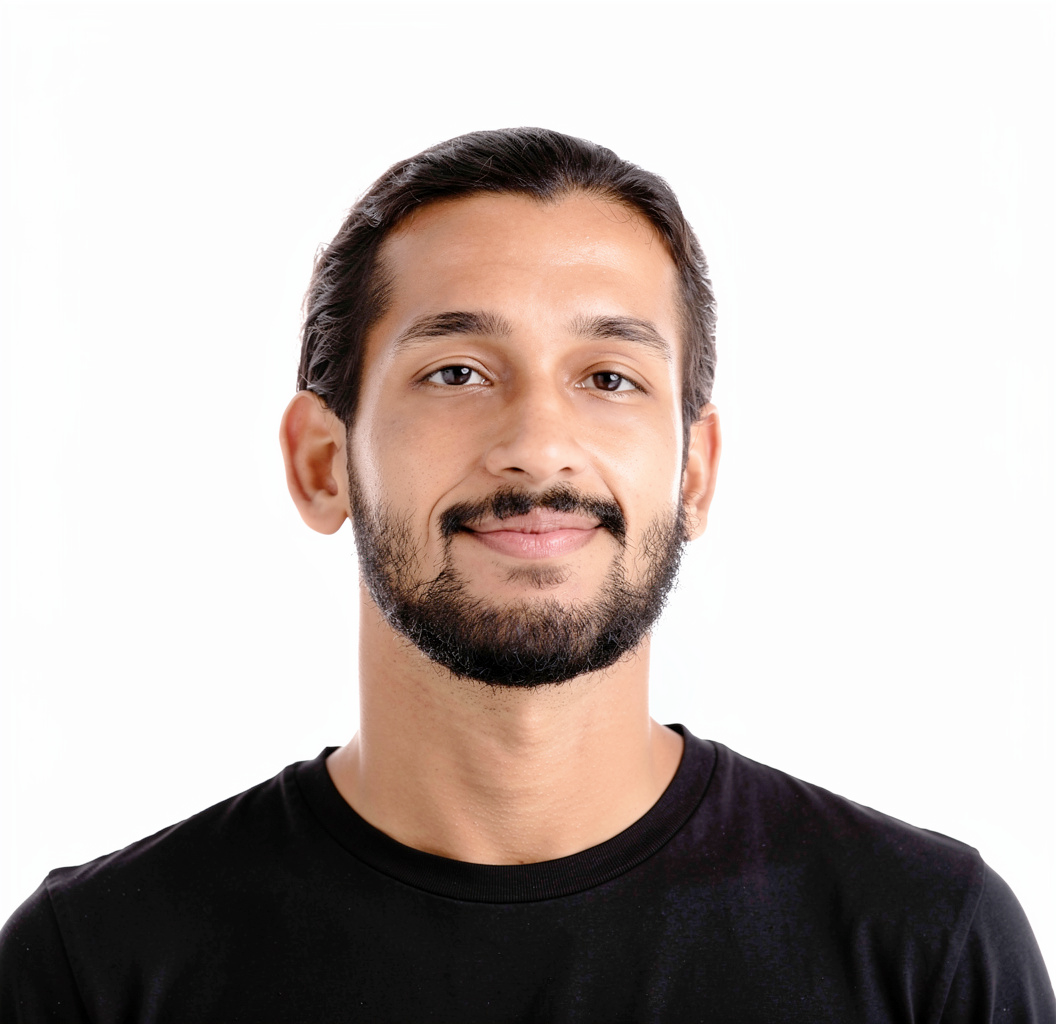
One more thing about those replies. We kept them casual and a little funny, never PR speak. Nobody wants a corporate statement sitting in their mentions, and authenticity just wins. It helped that Dhawal is genuinely that guy (honestly, just look at the man's Slack pfp below).
Then X went down
About an hour in, X went down.
X itself, the whole platform, went literally poof for around 40 minutes.
Right in the middle of the window that decides whether a launch lives or dies. Genuinely the worst possible timing.
Then, in the middle of the chaos, Jai dropped "first payment came in." Someone pre-ordered a $500 headset while the platform was actively falling over.
I joked that the cool narrative would be "we launched and took X down." It obviously went down on its own, we're not quite that good. But the launch trajectory wasn't entirely thrown off. When X came back, the momentum was still there, and it carried all the way to 2.5M and six figures.
If anything, the outage made the case for the war room better than I ever could. When something like that hits in the middle of your launch, you need people awake and on it, figuring out the next move, instead of finding out the next morning.
What it actually did
Pulling it together:
2.5M+ views across launch day and the tail, on a platform that had basically never worked too well for healthtech.
Six figures in pre-order revenue on launch day. That was the KPI we were partnered to hit.
80% of the audience landed in the US, which mattered because the pre-order only shipped there, and in India.
The takeaway
If you want the short version of the playbook:
Time the launch to drop just after your press comes through.
Lead with proof.
Split them into tiers and track everything to revenue.
Carry the first few hours with influencers, then bring in the founder's network.
Keep the replies human. Always.
Stay in the war room the whole time, because a launch is won in real time.
For a while the accepted wisdom was that healthtech can't launch on X, and that an expensive, considered product can't sell off social. I think this launch is decent evidence that both are wrong, as long as you build the whole thing around conversion instead of vanity & applause.
This is what we do at launchvideo.com for a living.